MASER Engineering × ICAM Toulouse · Saint-Nazaire
OLAProduction tracking for shipbuilding, from the PDF deck plan to the shop floor, offline.
Client
Maser Engineering
Role
Full-stack & AI vision pipeline
Team
Ori Dhumez-Biagi
Period
January 2025 – May 2026
Status
In production, pilot team · APK v3.0
01 · The problemMaser Engineering · cruise-ship cabins
Hundreds of cabins, tracked one by one, in zones with no network.
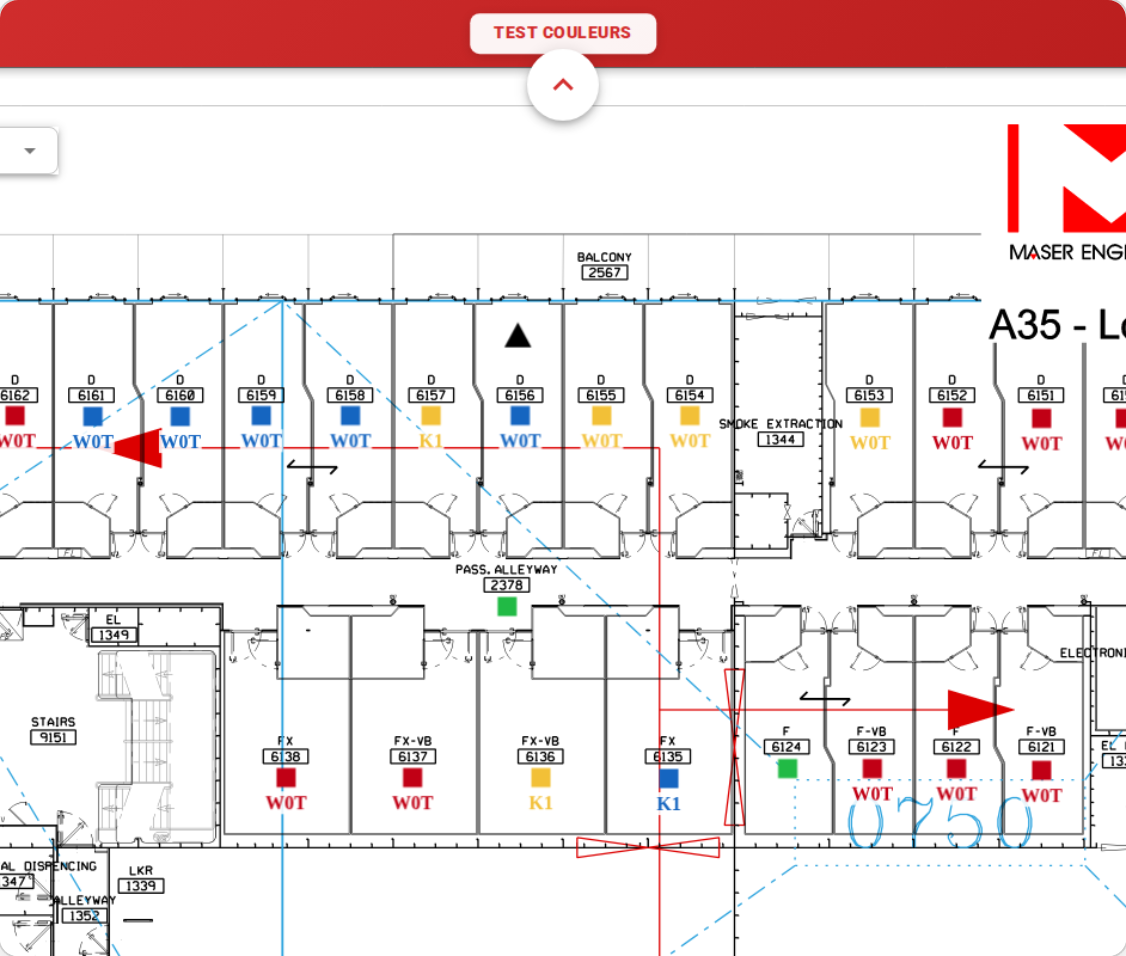
Progress lived on paper and scattered spreadsheets. No consolidated view, no forecast, and the ship’s steel blocks radio. OLA turns the PDF deck plan into a live production tracker that works offline on a tablet.
02 · How it worksThree moments
1
Prepare
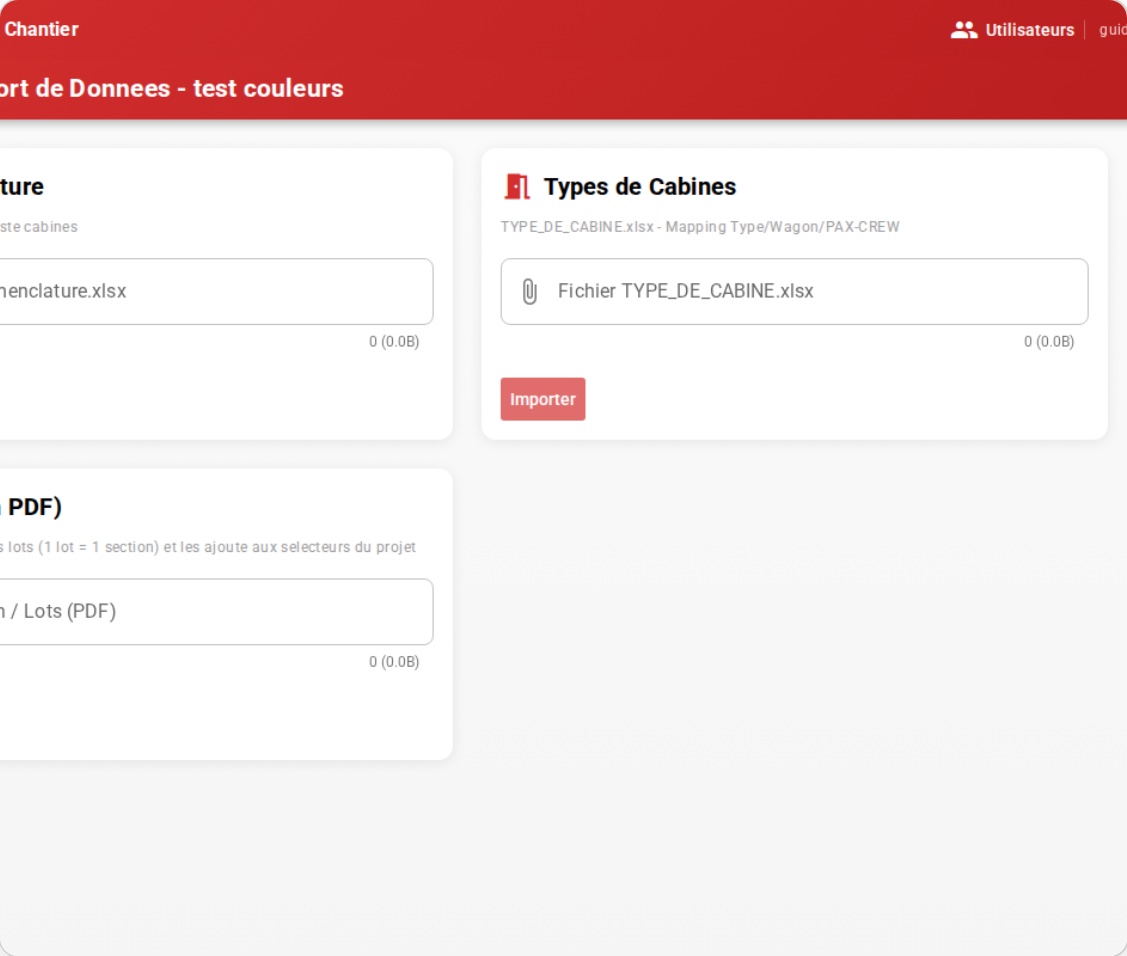
- Drop the PDF plan and the Excel schedule.
- YOLO + OCR detect every cabin and read its number.
- Thousands of tasks are generated. No manual entry.
2
Clock in the field
- Tap a cabin on the annotated plan.
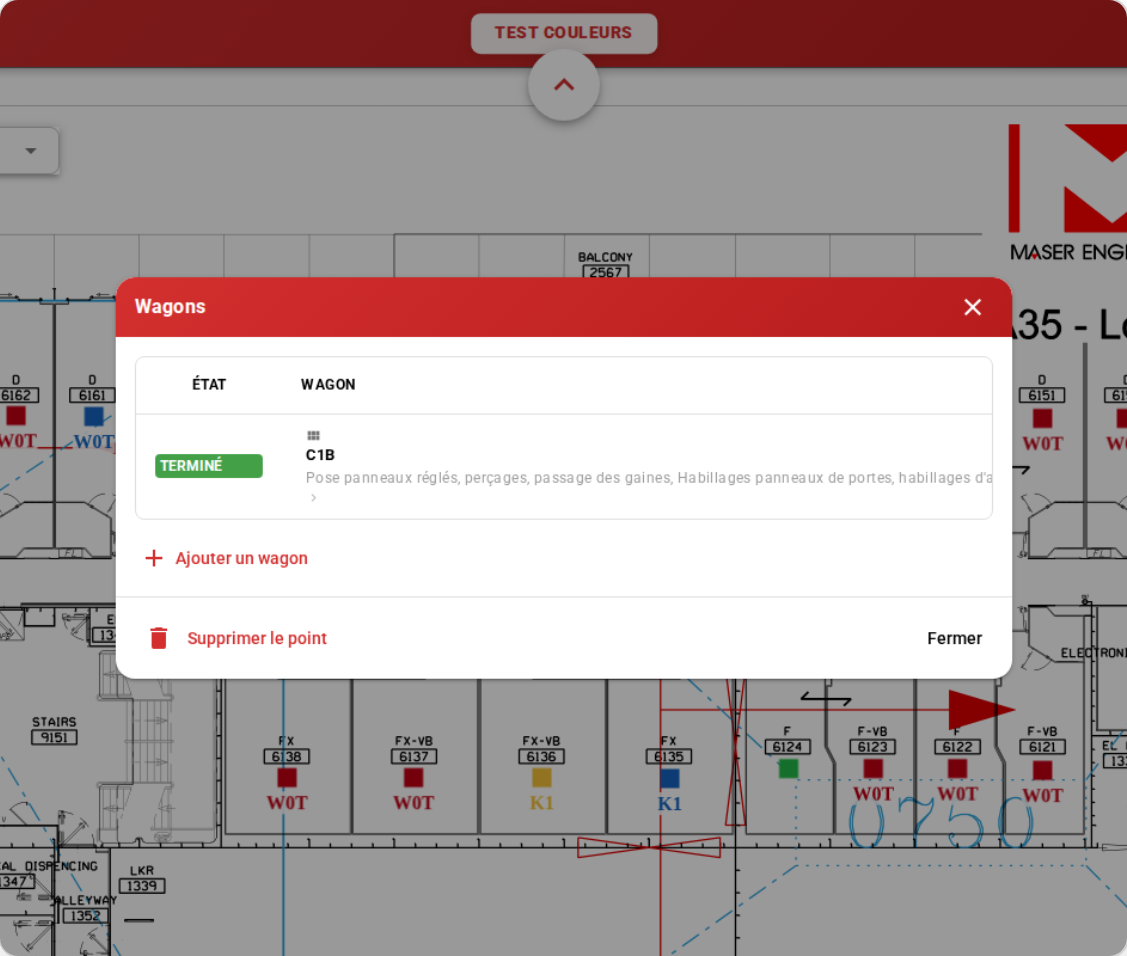
- Update states, log hours and photos.
- Fully offline; syncs when the network returns.
DoneBlockedTo do
3
Steer
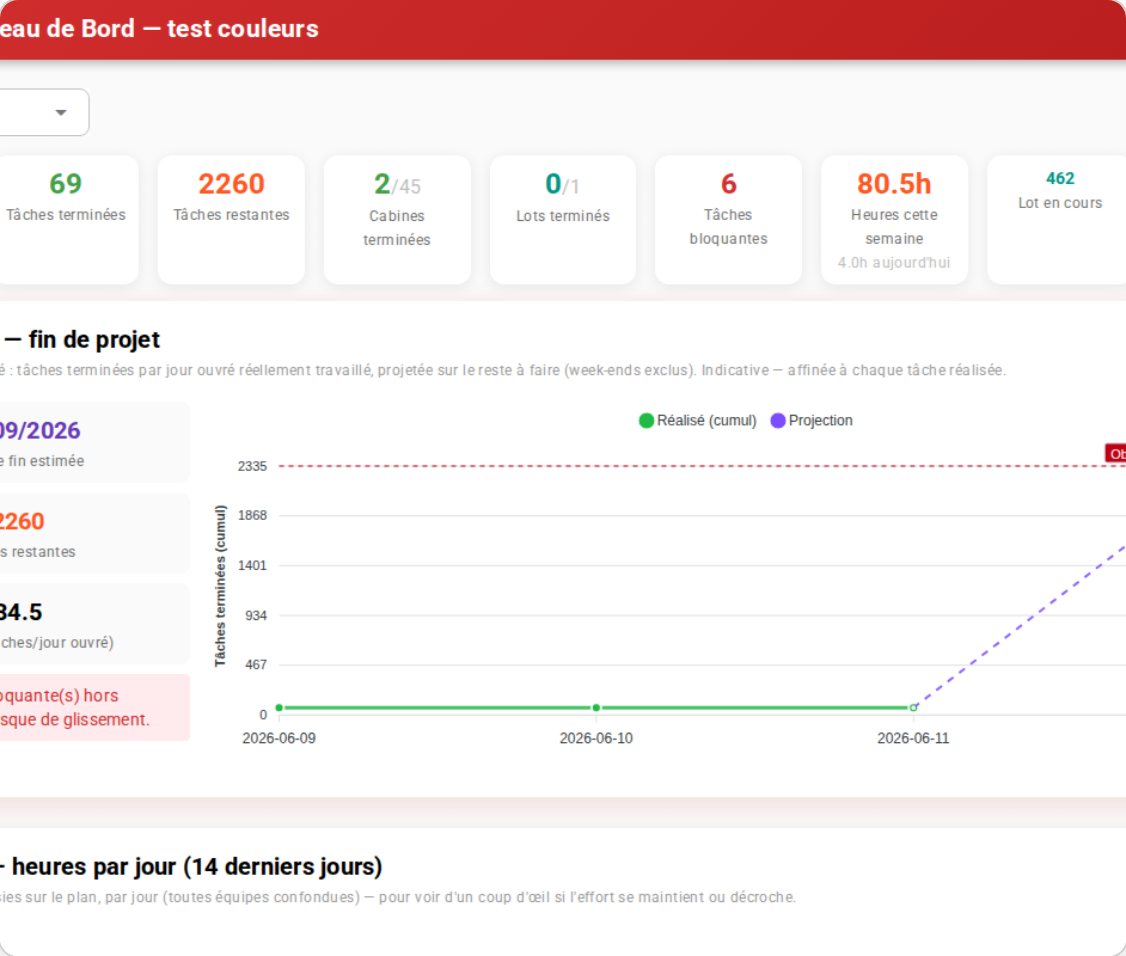
- Progress per lot, planned vs actual hours, blockers.
- Predicted end date from the team’s velocity.
- Excel and PDF exports.
03 · Three technical locksSolved
Lock 01
Same square on every screen
Plan annotations drifted between PC and tablet. Fixed with normalised PDF-space coordinates. Client-validated.
Lock 02
Offline sync
IndexedDB mirror and an outbox that replays on reconnect. Conflicts resolve per task; offline wins. e2e 13/13.
Lock 03
Lots read from the plan
OCR maps each PDF page to its lot and cross-checks cabin numbers against the client nomenclature.
04 · Under the hoodWhat I actually wrote
Three layers, one source of truth.
- Frontend. Vue 3 + Quasar SPA. pdf.js renders the deck plan, Fabric.js draws the cabin squares, pins and lines on top. A PouchDB-shaped client mirrors the project to IndexedDB and queues writes in an outbox.
- API. Node / Express 5, routes → services → repositories on node-postgres. JWT HS256 signed server-side, bcrypt cost 12, project-scope authorisation on every route. Input hardening: UUID asserts, integer parsing, status allow-lists, transactions.
- Data. PostgreSQL, 18 business tables + 2 auth tables + 7 analytical views, 3NF around a projet root (one project = one ship). UUID keys, cascade on the project tree. The API self-heals missing columns and views at boot.
- AI. YOLO cabin detection through Roboflow, key proxied server-side; OCR on the PDF annotations; results cross-checked against the Excel nomenclature.
- Ops. Docker Compose (db · api · frontend · nginx · pgAdmin), Capacitor APK for the tablets, deploy → smoke test → log, 42 times.
// offline outbox · replay on reconnect (simplified)
async function flushOutbox() {
  for (const op of await idb.getAll('outbox')) {
    try {
      await api.send(op);                   // projet:put · tache_session
      await idb.delete('outbox', op.id);
    } catch (e) {
      if (e.status !== 409) throw e;
      const server = await api.get(op.ref);
      op.body = mergeProjetLots(server, op.body); // offline wins per task
      if (op.retries++) await idb.put('dead-letter', op); // double 409
      else await idb.put('outbox', op);
    }
  }
}
window.addEventListener('online', flushOutbox);
Sync worker · IndexedDB · conflict = 409 → re-base → retry
18+2
business tables + auth tables
7
analytical SQL views feeding the dashboard
05 · ResultsIn production, pilot team
42
production deployments, smoke-tested
9 330
tasks generated in one real project
79/100
QA bugs fixed
29 pages
user guide · tablet APK v3.0
Vue 3 · QuasarNode · ExpressPostgreSQLIndexedDBDockerCapacitorYOLO · OCR